
Finding Cuyahoga Falls Residents
Begin with what you already know. An address sends you to Summit County property and parcel systems first. A full name plus a county belongs in the Ohio voter lookup. Case numbers, tickets, and court dates belong to the court holding that case. Family-history questions fit a library directory, a Probate file, a death index, or the census. Each route answers a different question. That separation keeps an owner, a court party, and a past household from blurring into one person.
Think of the Cuyahoga Falls residents directory as dated official trails. It is not one master list. Property rolls tie owners to land and taxes. Registrations expire and change with moves. Historic directories capture a single printed year. Court and Probate indexes show only who was a party to a matter. None of these supplies a complete current household list. A no-result can mean a name change. It can also mean a move, a restricted record, or a source that never covered that period.
- Standardize a known address, then identify its parcel and legal-description clue.
- Check the owner and situs fields, keeping the tax mailing address separate.
- For a named person, use Ohio Voter Search with first name, last name, and Summit County.
- Use the Recording Division or relevant court only for a dated document or case question.
- For an earlier household, compare a directory year with census, Probate, obituary, or cemetery material.
Cuyahoga Falls Resident Records Offices
Most records for Cuyahoga Falls residents live with Summit County or Ohio custodians. No single city directory office holds them all. The Fiscal Office keeps the property-tax and recording paths. Local voter questions go to the Board of Elections. The Clerk and Probate Court split court files by jurisdiction. Older printed and archival material sits with Cuyahoga Falls Library. The Akron-Summit County Public Library Special Collections also holds archival items. The Cuyahoga Falls street directory page carries the full address sequence.
Summit County Fiscal Office
175 S. Main St., 4th Floor
Akron, OH 44308
330-643-2720
Recording Division documents
Property Tax & Appraisal
Summit County Fiscal Office
Property and parcel access
1-888-388-5613
Property Tax & Appraisal access
Summit County Board of Elections
1050 E. Tallmadge Ave.
Akron, OH 44310
330-643-5200
Board of Elections
A web screen is not always enough. Counter service fills the gap. An index may be thin, or a record may be older than the online coverage. The Fiscal Office has announced a temporary Grant Street relocation during the Ohio Building renovation. That renovation runs through late 2026. Confirm the current counter location before you travel.
Note: A focused request works far better. Name a record, address, date, case, or parcel rather than asking an office to assemble a general person report.
Cuyahoga Falls Parcel Clues
For a Cuyahoga Falls address, start with the Summit property access service and the county parcel viewer. They are the natural first stop. A parcel is simply the tract carried in the tax system. Its situs address shows where the land sits. The mailing address shows where tax mail goes. The property card can list an owner or tax entity. It may also carry valuation, tax year, parcel reference, legal-description clues, and transfer references. Treat all of it as evidence of a property connection. It does not prove a named person lives there now.
The Summit County Parcel Viewer takes a parcel number, an owner name, or a street address. Pick the parcel that matches your location before chasing any instrument trail. Broad searches can return many possible records. The Fiscal Office tax-year choice also matters. Property information from different periods is easy to compare incorrectly.
| Property-search field | Use in a Cuyahoga Falls search |
|---|---|
| Parcel number | Connects the map selection with property and recorded-document research. |
| Owner | Finds a tax-owner connection, which needs separate occupancy confirmation. |
| Address number and street | Locates a situs address in the current tax system. |
| ZIP and tax year | Refines a property query or time period, not a household roster. |
| Legal description | Bridges deeds when an old street address changes or is absent. |
The Fiscal Office property screen shows the county’s tax and appraisal entry point.
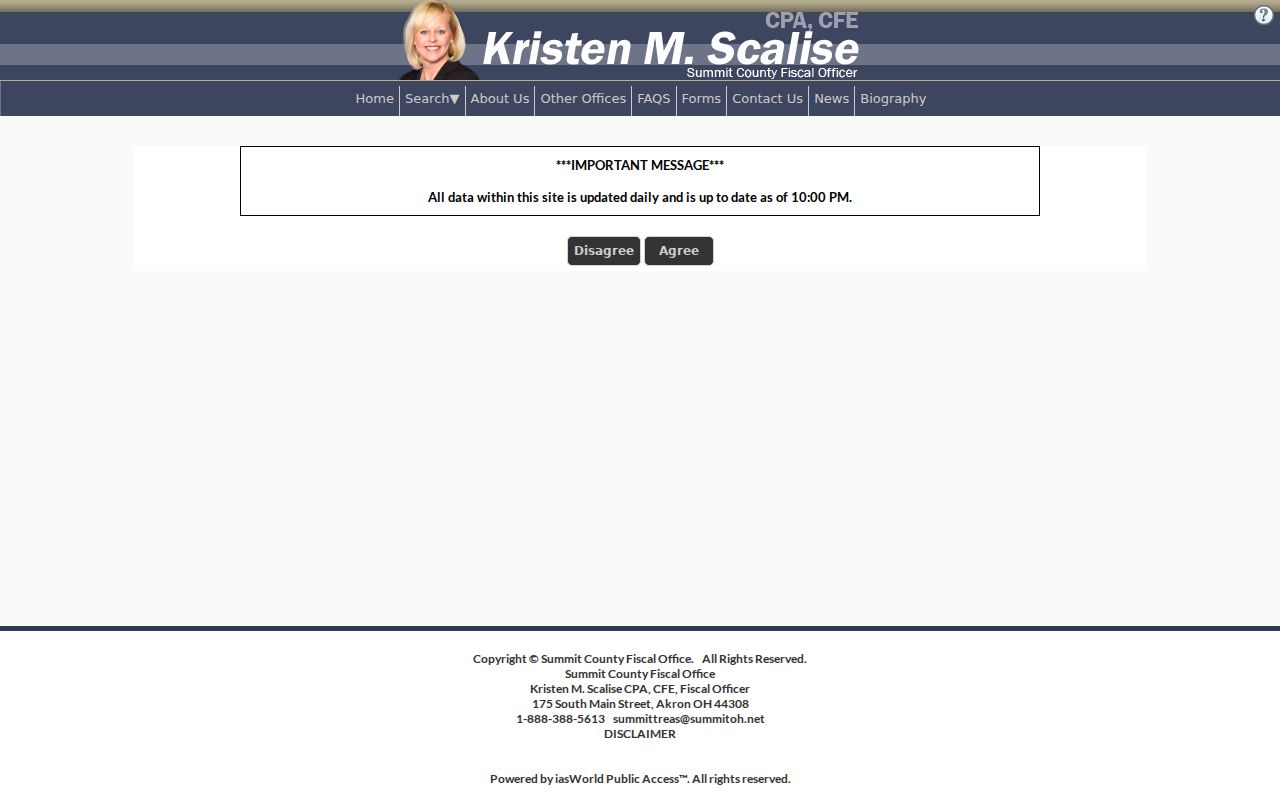
Property results make a solid start for a Cuyahoga Falls resident trail. Still, owner and mailing fields deserve independent confirmation with the date in mind, because a tax record can lag behind who actually occupies the address today.
Cuyahoga Falls Voter Checks
Ohio Voter Search is built to match one particular person. Enter a first name, last name, and county. Choose Summit for a current Cuyahoga Falls registration. A match can return registration details, precinct, and polling-location context. It never shows ballot choices. It also cannot browse a street and list everyone in an address range.
The state's search tips suggest narrow, practical moves. Try a formal or familiar first-name variation, or a former last name. A prior Ohio address can help when the match is shaky. The service can ask for a street name if candidates need narrowing. Keep the source date, since a registration can lag a move by months. A missing result does not prove someone never lived in Cuyahoga Falls.
The statewide lookup stands apart from the Secretary of State voter-data portal. It also differs from the Board of Elections public-record process. Read the live terms before requesting any data package. Ohio protections for Safe at Home participants and other confidential fields still apply.
Current Cuyahoga Falls Resident Rolls
Current resident information in Cuyahoga Falls is scattered by purpose. A property tax record ties an owner or tax entity to a parcel. The voter tool confirms one named registration. It does so in a set time frame. A recorder index connects parties to a recorded instrument. Court results show a party in a case. Each works as a directory only within its stated scope and date.
| Source | What it can establish | Custodian | Access route |
|---|---|---|---|
| Property / tax record | Owner or tax entity, parcel, situs and mailing distinction | Fiscal Office | Public property access |
| Named voter check | Registration, precinct, polling context | Ohio / Summit elections | State lookup or Board inquiry |
| Recorded instrument | Parties to a dated deed, mortgage, lien, or plat | Recording Division | Index, counter, or mail |
| Case record | Party connection to a specific proceeding | Mayor’s Court, Clerk, or Probate | Correct court division |
| Municipal record | Address-specific police, planning, or permit material | City or County office | Specific request or form |
To verify one person across those sources, run a name-first Cuyahoga Falls resident lookup. Common names should never be merged just because they surface in the same city.
Cuyahoga Falls Deed Names
The Summit County Recording Division keeps the paper trail behind every Cuyahoga Falls property. Deeds, mortgages, liens, plats, and legal descriptions all live there. Most records are open to public viewing, apart from military documents. Each recording ties named parties to a dated transaction. That can clarify a transfer or surface an earlier surname for deeper research. It cannot tell you who occupied the building on the day the paper was filed.
Build a chain the careful way. Pull the legal description and acquisition document for the current parcel. Note the grantor and grantee. Record the recording date. Add the instrument number or book/page. Include any reference to a prior document. Then track the seller back as an earlier grantee. Match lot, block, subdivision, or tract each time. When images run thin or the material is old, the Recording Division counter and its mail-copy channel handle it properly. A blank result on a website is not evidence of anything.
The county recorded-documents page names the official route. It also flags private deed-copy solicitations you can safely ignore.
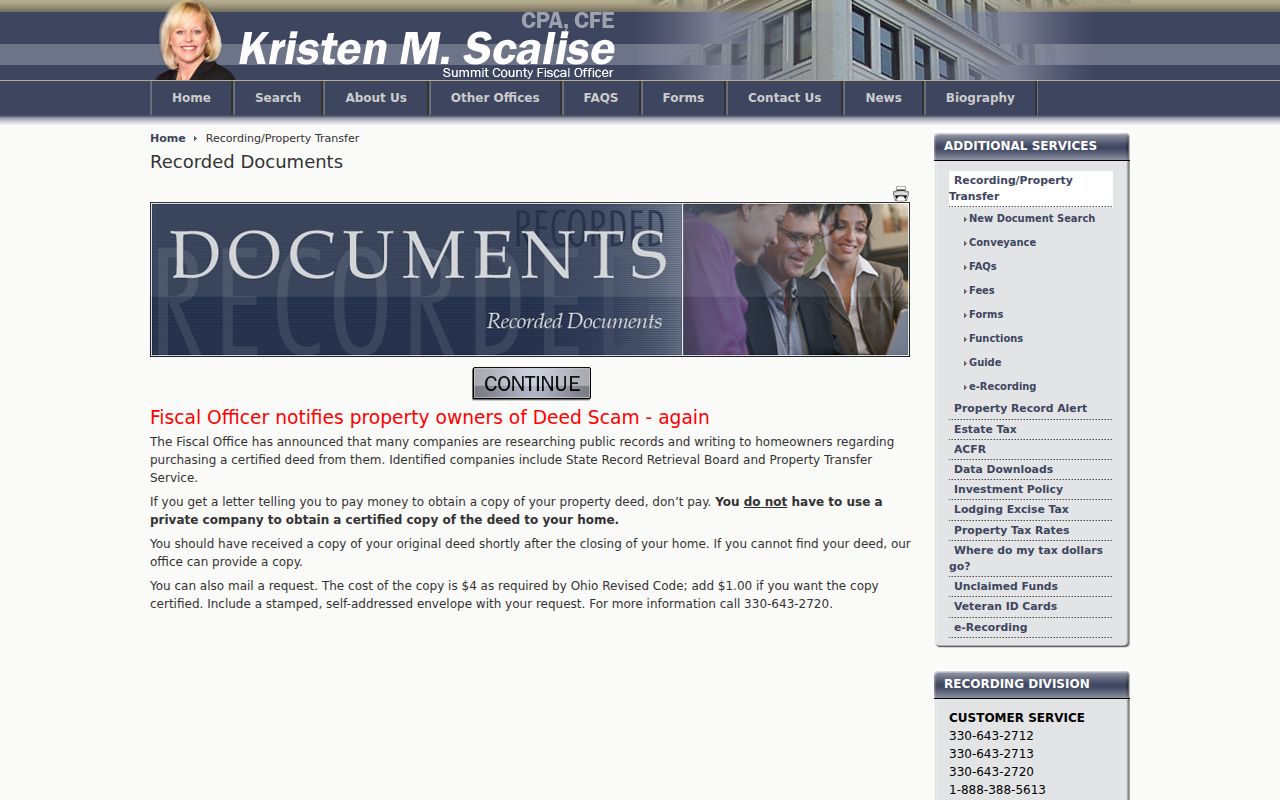
Use that official index first. Identify the instrument there before requesting an image or certified copy from the recorder.
Cuyahoga Falls Court Paths
Court research in Summit County splits by case type. The Cuyahoga Falls Mayor's Court takes eligible city matters. A Clerk division chooser routes searches for Common Pleas General Division, Domestic Relations, and the Ninth District Court of Appeals. Probate stands apart. Estates, guardianships, marriage records, historic birth and death material, and name changes all sit in that division. Coming up empty in one division does not mean the county has nothing.
A docket entry proves a named party's tie to a case. It proves nothing about where that person lives now. Keep the case number, court, date, and outcome together. For files absent from the web, file the Clerk's electronic public-records request or visit the court records room. Certified copies do not travel through that email channel.
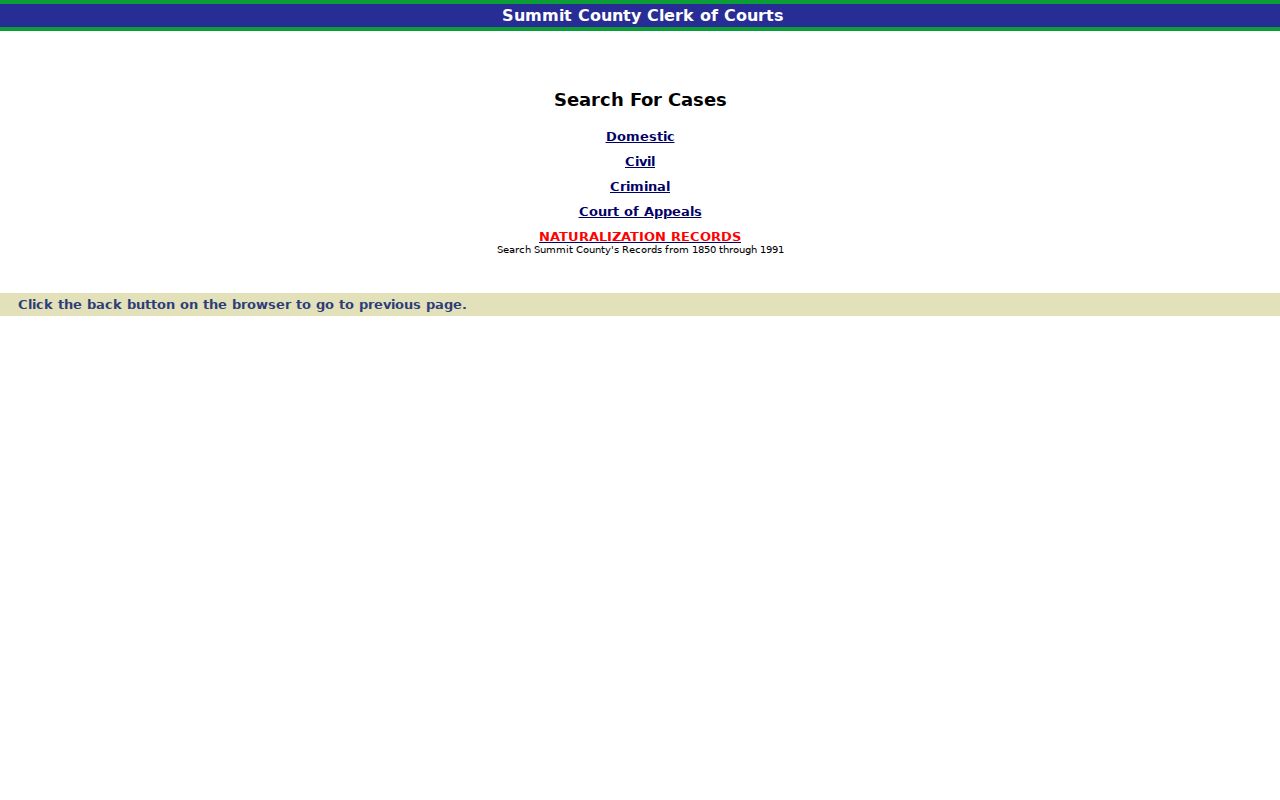
Pick the right division first. One court interface is never a complete Cuyahoga Falls record search.
Cuyahoga Falls Vital Trails
Vital records can close a historic trail. Year and record type decide the route. Summit Probate holds historic births and deaths from 1869 through 1908. It also holds estate, guardianship, and marriage material reaching back to 1840. For present-day certificates, Summit County Public Health is a documented issuer. The Ohio Department of Health is the other. Confirm the correct channel before ordering, since event year and purpose change it.
The Ohio History Connection death index is a finding aid, not a certificate office. It indexes state death certificates for 1913 through 1944 and 1954 through 1970. Other historical series are catalogued by the archive. Write down the exact spelling, event year, county, and certificate reference before chasing a copy.
Summit Probate historic vital guidance lays out the local historical split and current referrals.
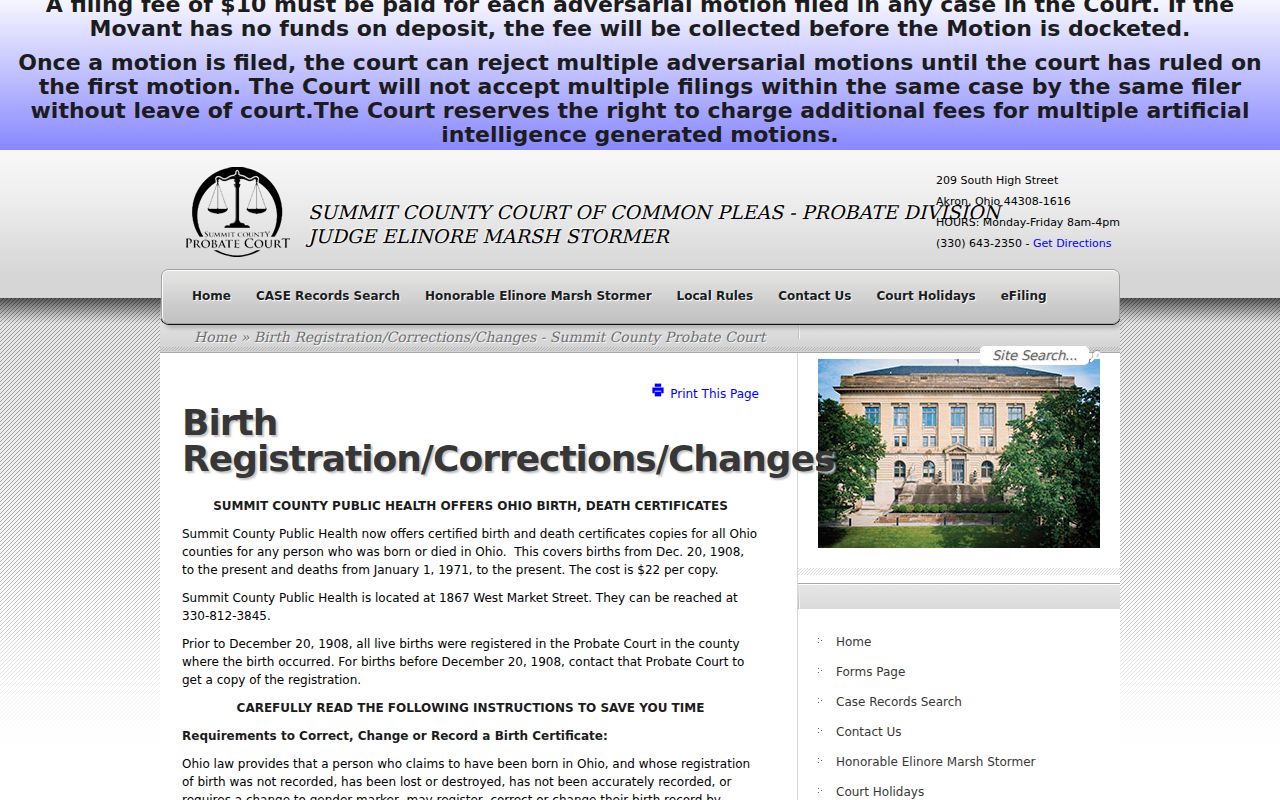
Probate records add archival and estate context that a current certificate request cannot provide.
Historical Cuyahoga Falls Resident Directories
Cuyahoga Falls has a long printed address trail. Cuyahoga Falls History posts digitized directory material from 1859 through 1891, early business-directory entries included. Akron-Summit County Public Library Special Collections keeps wider Akron-Summit runs. Cuyahoga Falls appears in most volumes. Open each year to be sure. The 1859 Williams volume and later Burch or Official City Directory titles can pin a name to a street in a given printed year.
The Cuyahoga Falls Library Local History Collection sits upstairs in the first adult-nonfiction aisle. The address is 2015 Third St. Area directories, yearbooks, and local history share the shelves. The newspaper film is strong too. Cuyahoga Falls Reporter runs from 1870 to 1952. News Press runs from 1930 to 1979 plus 1981 to 2014, with a known 1980 gap. The Cuyahoga Falls city directory page gathers the full collection and entry-reading detail in one place.
The library research page is the natural first stop for local history and genealogy questions.
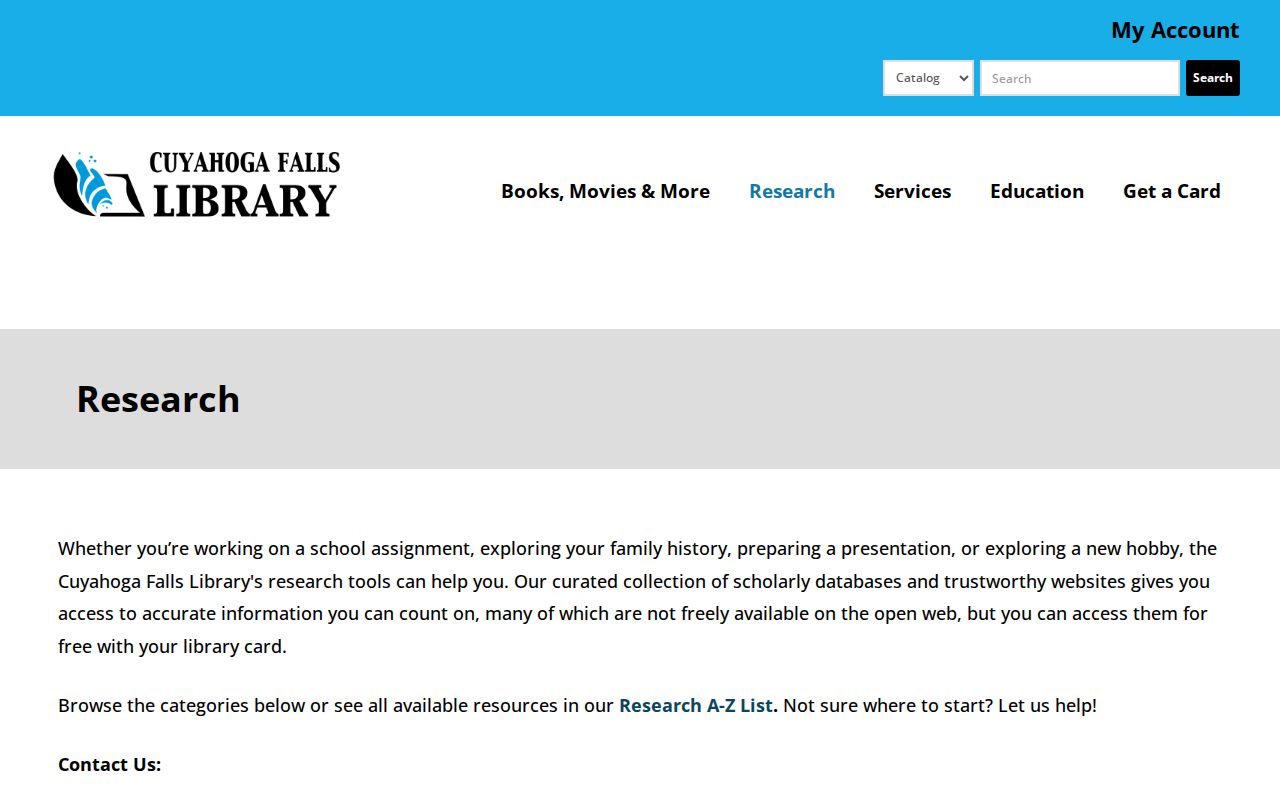
Library staff and ASCPL Special Collections answer what online records cannot.
Cuyahoga Falls Maps and Records
A good map makes a Cuyahoga Falls address legible before you read an old record. The city's Interactive Mapping page points to a local address and parcel tool. It returns zoning designation, council ward, code-enforcement references, tax links, satellite view, and street view. The county map supplies the parcel geometry itself. City context comes from one; parcel navigation works better through the other.
Older records may use a place name you do not expect. Cuyahoga Falls began as Manchester. The city merged with Northampton Township in 1985/1986. Deeds, maps, cemetery references, or directories from that area can still carry the township name. Bridge the gap with the legal description and a historic map. Avoid a mechanical swap of locality names.
The city mapping overview displays the local layers sitting beside the county parcel record.
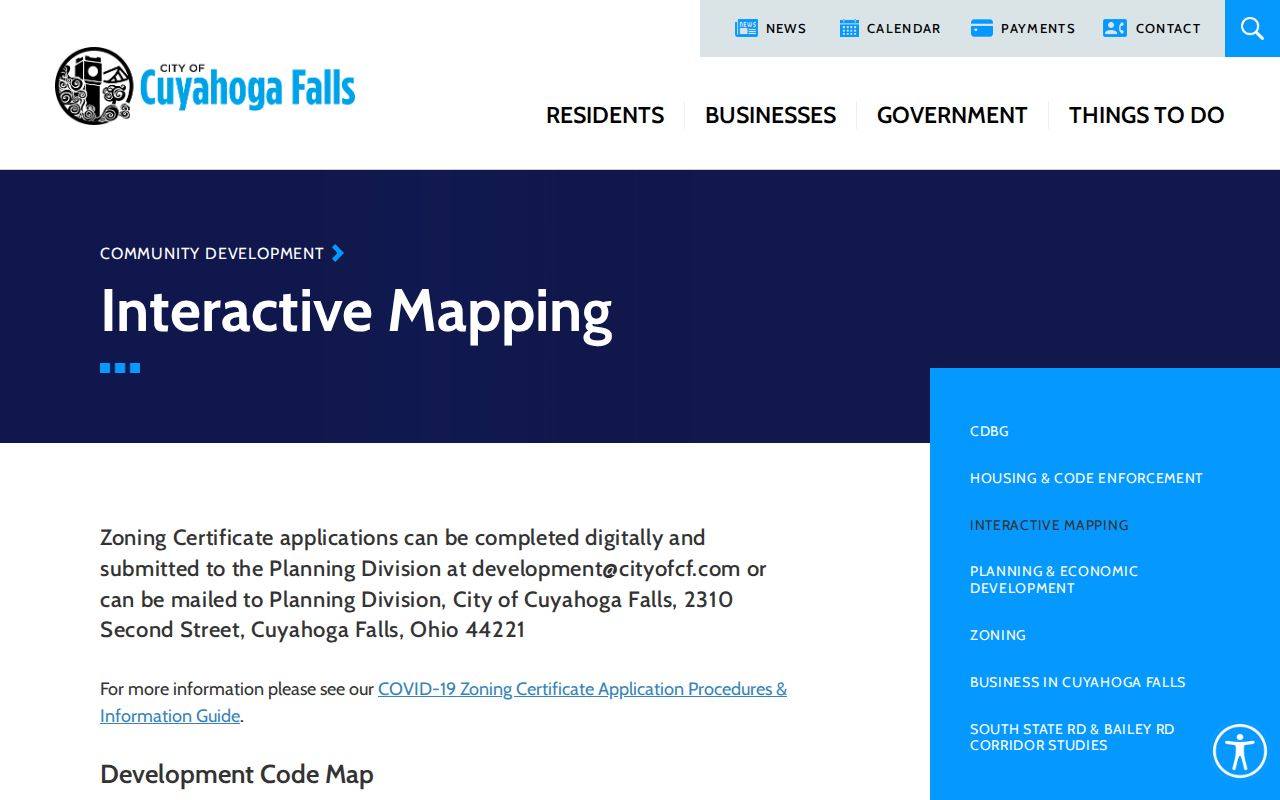
A map explains a ward or code record. It never identifies a whole household.
Cuyahoga Falls Resident Privacy
Ohio public-record access stops at firm lines. The Safe at Home Address Confidentiality Program shields qualified participants behind a substitute address and confidential voter information under R.C. §§111.41–111.47. Voter exclusions, protected motor-vehicle data, sealed court material, adoption records, and sensitive vital-record fields stay closed. Knowing a name or street unlocks none of them.
Ohio’s Public Records Act, R.C. 149.43, opens the door to nonexempt records across Cuyahoga Falls and Summit County. The law has limits. No office must build a fresh resident report or hand over confidential details. If a records portal stalls, request one specific existing record from the custodian. Then accept the answer that comes back.
Cuyahoga Falls Official Search Checks
Official links are the safest entry point for any resident lookup. The Fiscal Office warns about private letters. Those letters may solicit payment for a deed the county already provides cheaply or free. Summit Clerk issued its own alert in August 2026 about a fraudulent record-search impersonation page. That office tells users to start at its official domain every time. Type the government, court, library, or archive address yourself. Then compare the domain and contact details before you share anything or pay a fee. The Cuyahoga Falls Mayor’s Court docket is the official court route shown here. Let the Clerk’s fraud warning push you to type the court domain directly.
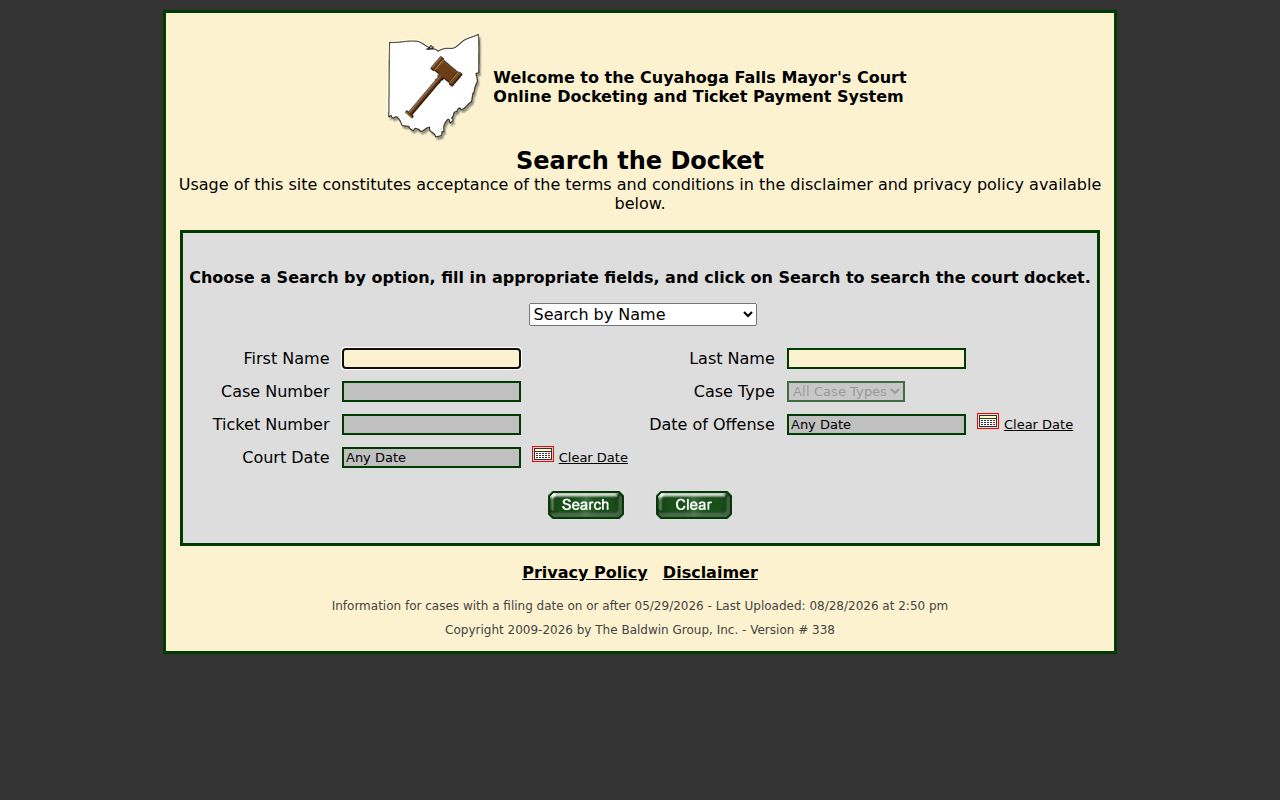
A court docket helps when you already know the case. Open it only through the verified court route, and read it within the jurisdiction that produced it.
Cuyahoga Falls Public Safety Records
Public-safety records answer narrow questions, not general resident searches in Cuyahoga Falls. A custody roster shifts hour by hour. A court docket is still the right companion record once a case question arises. The Summit County Sheriff hub gathers official custody, registry, records-request, and scam resources. It puts them all in one place. The Sheriff official hub collects the county public-safety access routes. Cuyahoga Falls Police Records handles accident and incident reports. Its forms require specific identifiers. Exemptions and redactions are applied as the law demands.
Treat a custody or police source as a tool with one stated purpose. Verify any time-sensitive result with the responsible agency before acting on it.
A report number is the clearest route for a city accident request. Without one, the city form needs two identifiers. These are drawn from the driver name, accident date, and location. That narrow process mirrors the resident-search rule across Cuyahoga Falls. Ask for the record that exists. Keep its date and custodian in view. Never stretch a limited public-safety record into a broad person profile.