
Cuyahoga Falls ZIP Code Coverage
Two postal ZIP codes serve Cuyahoga Falls: 44221 and 44223. Both carry the city's postal name. Both hold confirmed Cuyahoga Falls addresses too. Treat the ZIP code directory as a postal reference. It is not a map of municipal borders. An address still needs USPS verification. A parcel or city map check settles which local records apply.
| ZIP | Areas covered | Post office | Notes |
|---|---|---|---|
| 44221 | Central and south areas, including many city addresses. City examples include City Hall at 2310 Second St. and ward streets such as High St., Myrtle Ave., Broad Blvd., Hudson Dr., and Bailey Rd. | Cuyahoga Falls postal designation | Postal coverage does not define the city boundary. |
| 44223 | Northern and western city examples include Parkview Dr., Shaw Ave., Phelps Ave., 16th, 17th, and 18th streets, North Haven Blvd., and 2320 12th St. | Cuyahoga Falls postal designation | Verify the exact delivery address before using the ZIP in a record request. |
Cuyahoga Falls has no single unique ZIP, and no PO-box-only ZIP serves it either. No official source publishes a ZIP-wide list of residents or owners for the city. That gap matters. A postal match alone cannot show who receives mail at an address, so any Cuyahoga Falls residents directory built from ZIP data stops short of a true resident lookup.
Cuyahoga Falls USPS ZIP Check
The USPS ZIP Code Lookup does one job. It standardizes a single delivery address. Three modes cover the angles: address to ZIP, city and state to a ZIP list, and ZIP to cities. USPS is clear about limits. A returned ZIP proves no person or business sits at the address, which keeps the Cuyahoga Falls ZIP code directory useful without turning a mail tool into a resident lookup.
| USPS search mode | Search key | What it returns |
|---|---|---|
| Address to ZIP | One complete street address | Postal ZIP information for that address. |
| City and state to list | City and state | ZIP codes associated with that place entry. |
| ZIP to cities | One ZIP code | Postal city information connected to the ZIP. |
Standardize a single delivery address with the USPS ZIP Code Lookup. The tool works three ways. It converts an address to a ZIP. It lists ZIPs for a city and state. It also shows the cities in a ZIP. USPS states plainly that a returned ZIP proves no person or business at that address. That distinction keeps the Cuyahoga Falls ZIP code directory useful. It avoids dressing up a delivery tool as a resident lookup.
Note: USPS confirms mail routing for an address, while the county and city systems answer parcel and jurisdiction questions.
Cuyahoga Falls ZIP Code Search Limits
No Cuyahoga Falls tool lists residents by ZIP. Every official option searches something narrower. The county Parcel Viewer runs on a parcel number, an owner name, or a street address. The city mapping page works the same way. Ohio Voter Search asks for a first name, a last name, and a county, so none of these record tools acts as a ZIP-wide people directory for Cuyahoga Falls.
| Portal | Documented search key | ZIP-only resident result |
|---|---|---|
| Summit County Parcel Viewer | Parcel number, owner name, or street address | No documented ZIP-only result |
| City interactive map | Address or parcel ID | No documented ZIP-only result |
| Ohio Voter Search | First name, last name, and county | No ZIP filter or ZIP-only result documented |
| USPS ZIP Lookup | Address, city/state, or ZIP | No person or business confirmation |
Treat the ZIP code directory as a way to sharpen an address, nothing more. Once the address is firm, the county and city portals each serve their stated public functions for records. A name, though, must travel its own official record path through the proper records office.
Cuyahoga Falls Parcel Address Search
The Summit County property search covers the tax and appraisal side of any address question. Its records run deep. A search can return the parcel identifier, situs address, owner name, legal description, tax year, bill or account, mailing address, valuation, exemptions or credits, and transfer or recorded-document references. One caution matters. A tax owner, trust, estate, or mailing address is not automatically a resident at the situs. The Summit property-search screen supports address-keyed research into Cuyahoga Falls property rolls.
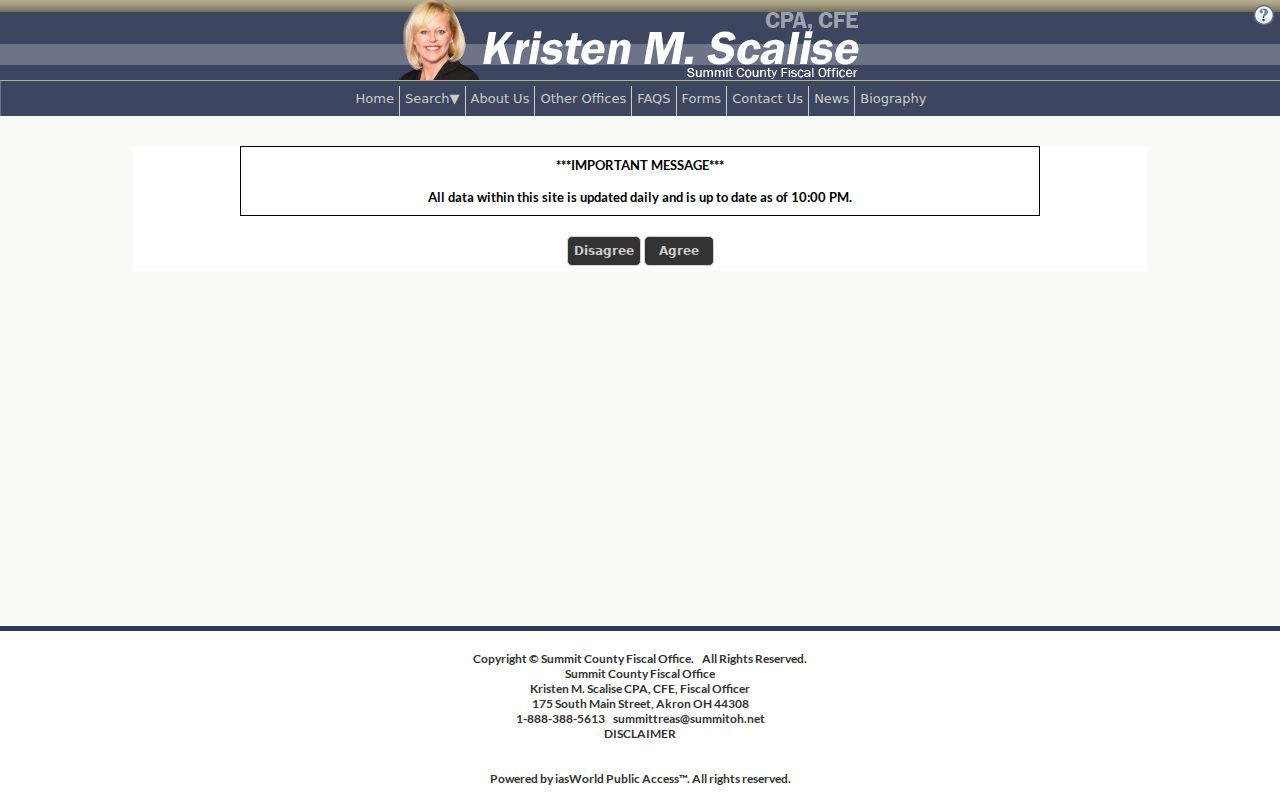
A parcel record can pin down a property in Cuyahoga Falls. The ZIP code alone cannot do the same work. It bounds a mailing area, not a household roster. A parcel address search supports the Cuyahoga Falls ZIP code directory without ever listing current occupants on its own.
For geography, the county Parcel Viewer places an address among its surrounding parcels. The city's interactive mapping goes further. It layers zoning, ward, tax data, code enforcement, satellite imagery, and street view onto the same Cuyahoga Falls landscape. These are land records. They describe property rolls and local terrain, not the people living there.
Cuyahoga Falls ZIP Code Records
A Cuyahoga Falls ZIP code narrows the postal picture. From there, the search has to move to one address or one named record. Skip the temptation to invent a ZIP filter. The official portals simply do not offer one, so a Cuyahoga Falls ZIP code directory works best as a first step in the residents directory, not the last.
- Enter the full street address in USPS ZIP Code Lookup and preserve the standardized postal form.
- Use the address or parcel identifier in the county or city map to locate the parcel and its public record context.
- For a land question, read situs, owner, mailing, and legal-description fields as separate facts.
- For a named person, use the appropriate voter, court, probate, or vital-record route, then cross-check an independent dated record.
A ZIP narrows the hunt to one stretch of street. From there, address evidence lives in the Cuyahoga Falls street directory. That route carries a search from parcel details through dated documents, giving the Cuyahoga Falls ZIP code directory a firm base without pretending a postal code alone names residents.
Cuyahoga Falls Police Requests
The city's online accident-report request takes a report number or two of three identifiers: driver, date, and location. A ZIP helps describe a location. It is not the request key itself. A specific event identifier beats a broad postal-area search every time.
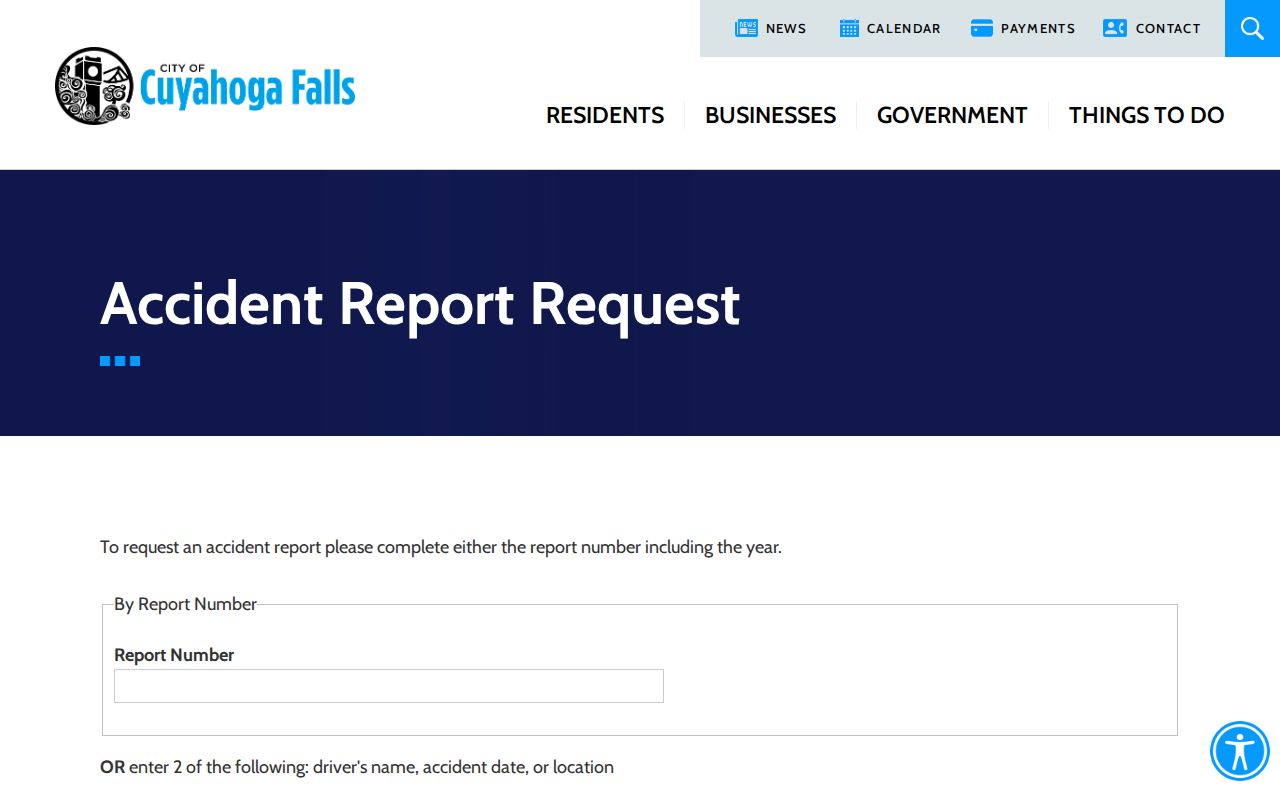
A report number works best. So does a documented pair of identifying details. Either one lets the Records Division pull an existing Cuyahoga Falls record instead of guessing from a ZIP code, which is no substitute for a proper resident lookup at the records office.
Cuyahoga Falls Police Records lays out the report channels and how access works. Some material stays protected. Investigative files, juvenile records, medical details, and other exempt information can be withheld or redacted under the law that governs each release.
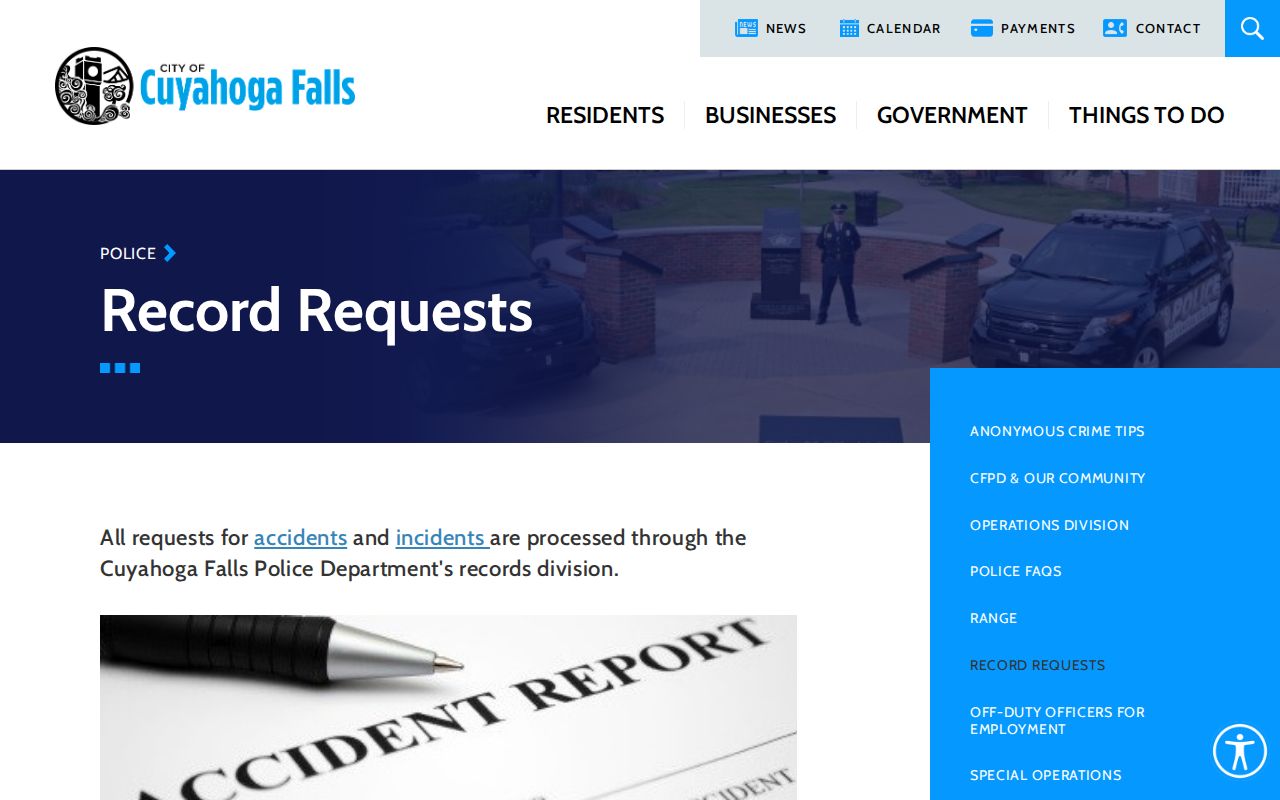
Access follows the report itself. A police record in Cuyahoga Falls is released as its rules permit, and nothing about a postal area makes every event inside it publicly searchable.
Cuyahoga Falls Manchester Geography
Cuyahoga Falls postal geography is newer than its records. The community started as Manchester in 1812, was platted in 1826, and incorporated in 1836. After 1985 approval, it merged with Northampton Township, and city material treats the merger as effective January 1, 1986. Today the city covers 25.80 square miles of land. That history matters for lookups. Older deeds, maps, obituaries, directories, and court records can carry the name Manchester or Northampton Township for ground that now sits under a Cuyahoga Falls mailing address.
Start any historical search with the street and name as written at the time. Two resources help place an address. Haines reverse directories are held at Akron-Summit County Public Library, and Sanborn sheets from 1884, 1889, 1893, 1901, 1916, and 1927 cover the built-up ground. Check a sheet's geographic coverage before drawing any conclusion. Never map a historic ZIP backward from a modern one either.
Note: A legal description, lot, block, subdivision, tract, or survey reference bridges older place labels more reliably than a ZIP.
Cuyahoga Falls ZIP Code Boundaries
A ZIP code is a Postal Service delivery classification. It is not a municipal boundary. A parcel boundary is a different thing. Neither one proves city jurisdiction. So an address carrying the Cuyahoga Falls postal name may still need a parcel and ward check before it can be treated as a city record. Confirm the full address, then ask the right custodian for the existing record, since city services, tax records, and legal descriptions follow their own geography.
- Situs address
- The physical location of a parcel, used to navigate property and map records.
- Mailing address
- The address for tax correspondence. It can be outside Cuyahoga Falls and does not prove residency.
- Legal description
- The recorded lot, block, subdivision, tract, or survey description that carries a parcel across transfers and address changes.
- Carrier route
- A mail-delivery grouping. It does not establish a city limit, parcel boundary, or household list.
Boundary check. Use the postal ZIP to verify delivery, then use the county parcel or city address record for legal and municipal context. Never use a ZIP result to expose or pursue a person.
Cuyahoga Falls ZIP Code Terms
A ZIP code directory has one simple job. It puts an exact address into its postal form. ZIP+4 routing is more detailed than the five-digit ZIP. A PO-box ZIP marks a mailbox service. A unique ZIP can belong to a single institution. No such designation appears for Cuyahoga Falls, so leave an unknown field open for the custodian rather than filling it with an assumed ZIP or address.
- ZIP versus ZIP+4
- The five-digit ZIP routes mail to an area; ZIP+4 adds delivery detail for an individual address or mail segment.
- PO-box ZIP
- A ZIP assigned for post-office boxes. No such local ZIP was documented in the research.
- Unique ZIP
- A ZIP assigned to one organization or institution. The research did not establish one for Cuyahoga Falls.
Postal results never replace a records request. Ask the office that holds the record. For a property question, bring the standardized address or parcel. For a report, bring the documented identifier. Historical questions work best with the date plus the older street or place name, which gives the custodian something to locate while keeping postal geography and personal information apart.