
Finding Cuyahoga Falls Residents
Start with the fact already known. An address belongs first in the Summit County property and parcel systems. A full name with a county belongs in the Ohio voter lookup. A case number, ticket, or court date belongs with the court that owns that case. A family-history question belongs with a library directory, Probate file, death index, or census. These routes answer different questions, which keeps an owner, a court party, and a past household from being treated as the same thing.
The Cuyahoga Falls residents directory is a set of dated official and archival trails. Property records identify tax and ownership connections. Registration records are time-bound. Historic directories capture a printed year. Court and Probate indexes can confirm that a person was a party to a specific matter. No route supplies a complete current household list, and a no-result can mean a name change, movement, restricted record, or a source that does not cover the period.
- Standardize a known address, then identify its parcel and legal-description clue.
- Check the owner and situs fields, keeping the tax mailing address separate.
- For a named person, use Ohio Voter Search with first name, last name, and Summit County.
- Use the Recording Division or relevant court only for a dated document or case question.
- For an earlier household, compare a directory year with census, Probate, obituary, or cemetery material.
Cuyahoga Falls Resident Records Offices
Most Cuyahoga Falls resident records sit with Summit County or Ohio custodians rather than one city directory office. The Fiscal Office holds the property-tax and recording paths. The Board of Elections handles local voter questions. The Clerk and Probate Court split court records by jurisdiction. Cuyahoga Falls Library and Akron-Summit County Public Library Special Collections preserve the older printed and archival trails. The full address sequence is kept on the Cuyahoga Falls street directory page.
Summit County Fiscal Office
175 S. Main St., 4th Floor
Akron, OH 44308
330-643-2720
Recording Division documents
Property Tax & Appraisal
Summit County Fiscal Office
Property and parcel access
1-888-388-5613
Property Tax & Appraisal access
Summit County Board of Elections
1050 E. Tallmadge Ave.
Akron, OH 44310
330-643-5200
Board of Elections
Counter access matters when a web screen is incomplete. The Fiscal Office has announced a temporary Grant Street relocation during Ohio Building renovation through late 2026, so confirm the current counter location before a visit.
Note: A focused request naming an existing record, address, date, case, or parcel is more useful than asking an office to create a general person report.
Cuyahoga Falls Parcel Clues
The Summit property access service and the county parcel viewer are the practical first stop for a Cuyahoga Falls address. A parcel is the tract carried in the tax system. Its situs address tells where land sits; a mailing address tells where tax correspondence goes. The property card can show an owner or tax entity, valuation, tax year, parcel reference, legal-description clues, and transfer references. That information is evidence of a property connection, not proof that a named person currently occupies the address.
The Summit County Parcel Viewer accepts a parcel number, owner name, or street address. Select the parcel that matches the location before following an instrument trail. Wide searches can produce many possible records, and the Fiscal Office tax-year choice matters when comparing property information from different periods.
| Property-search field | Use in a Cuyahoga Falls search |
|---|---|
| Parcel number | Connects the map selection with property and recorded-document research. |
| Owner | Finds a tax-owner connection, which needs separate occupancy confirmation. |
| Address number and street | Locates a situs address in the current tax system. |
| ZIP and tax year | Refines a property query or time period, not a household roster. |
| Legal description | Bridges deeds when an old street address changes or is absent. |
The Fiscal Office property screen shows the county’s tax and appraisal entry point.
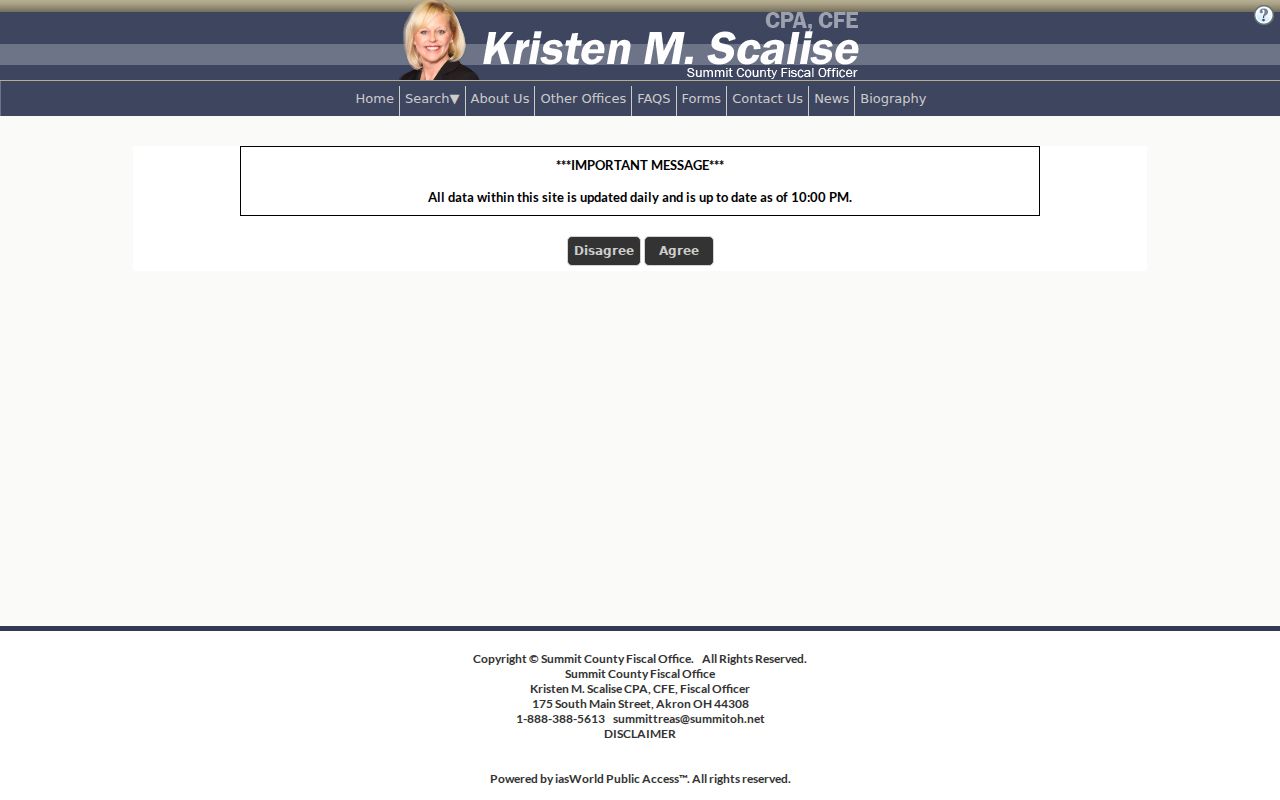
Property results provide a starting point for a Cuyahoga Falls resident trail, but the owner and mailing fields need independent, date-aware confirmation.
Cuyahoga Falls Voter Checks
Ohio Voter Search is a match-oriented tool for a particular person. It requires first name, last name, and county, with Summit selected for a current Cuyahoga Falls registration. A result can provide registration, precinct, and polling-location context. It does not disclose ballot choices, and it is not a street-browser for listing everyone along an address range.
The state’s search tips support practical, limited checks: try a formal or familiar first-name variation, a former last name, or a prior Ohio address when a match is uncertain. If candidates need narrowing, the service can ask for a street name. Preserve the source date because a registration can lag a move. A missing result does not establish that someone never lived in Cuyahoga Falls.
The statewide lookup is separate from the Secretary of State voter-data portal and the Board of Elections public-record process. Read the live terms before requesting a data package. Ohio protections for Safe at Home participants and other confidential fields remain in force.
Current Cuyahoga Falls Resident Rolls
Current Cuyahoga Falls resident information is scattered by purpose. A property tax record connects an owner or tax entity to a parcel. The voter tool confirms a named registration in a particular time frame. A recorder index connects parties to an instrument. Court results show a party in a case. These are useful directories only when read for their stated scope and date.
| Source | What it can establish | Custodian | Access route |
|---|---|---|---|
| Property / tax record | Owner or tax entity, parcel, situs and mailing distinction | Fiscal Office | Public property access |
| Named voter check | Registration, precinct, polling context | Ohio / Summit elections | State lookup or Board inquiry |
| Recorded instrument | Parties to a dated deed, mortgage, lien, or plat | Recording Division | Index, counter, or mail |
| Case record | Party connection to a specific proceeding | Mayor’s Court, Clerk, or Probate | Correct court division |
| Municipal record | Address-specific police, planning, or permit material | City or County office | Specific request or form |
When the objective is to verify one person across those sources, use a name-first Cuyahoga Falls resident lookup. Do not merge common names merely because they appear in the same city.
Cuyahoga Falls Deed Names
The Summit County Recording Division preserves deeds, mortgages, liens, plats, legal descriptions, and other recorded instruments. Its public-viewing rule covers records other than military documents. A recording links named parties to a dated transaction, so it can explain a property transfer or provide a prior name to research. It does not say who lived in the building on the recording date.
For a sound chain, take the legal description and acquisition document from the current parcel. Record grantor, grantee, recording date, instrument number or book/page, and any previous-document reference. Then identify the seller as an earlier grantee and compare the same lot, block, subdivision, or tract. Older material or missing images belongs with the Recording Division counter or mail-copy channel, not an unsupported conclusion from a web no-result.
The county recorded-documents page identifies the official route and warns readers about unnecessary private deed-copy solicitations.
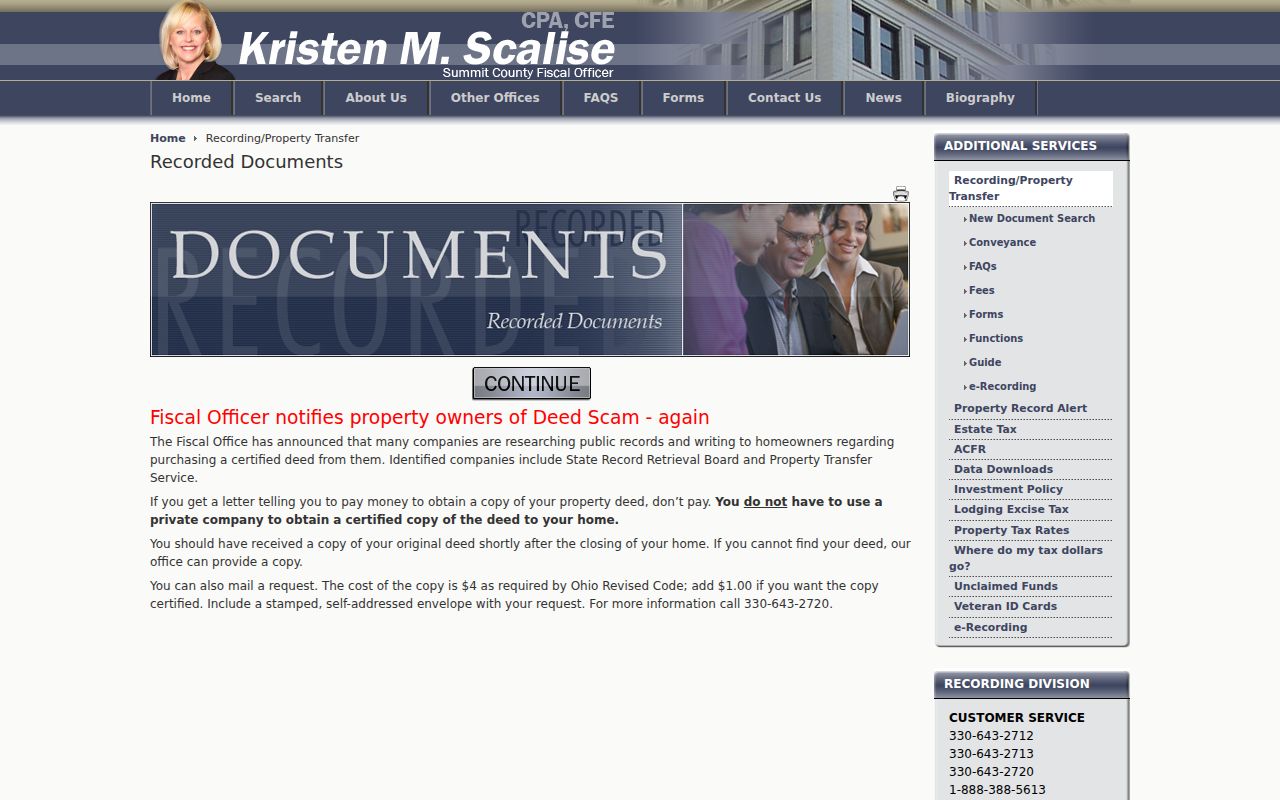
That official index is the place to identify an instrument before asking the recorder for an image or certified copy.
Cuyahoga Falls Court Paths
Summit court research is divided by case type. The Cuyahoga Falls Mayor’s Court handles eligible city matters. The Summit County Clerk division chooser routes Common Pleas General Division, Domestic Relations, and Ninth District Court of Appeals searches. Probate is separate and holds estates, guardianships, marriage records, historic birth and death material, and name-change records. A negative result in one division should not be read as a countywide absence.
A docket entry proves a named party connection to a case, not present residence or guilt. Keep the case number, court, date, and result screen together. For a file that is not available online, use the Clerk’s electronic public-records request or the court records room. Certified copies cannot be emailed through that request channel.
The Clerk public division selector shows the separate court paths used for a Cuyahoga Falls record search.
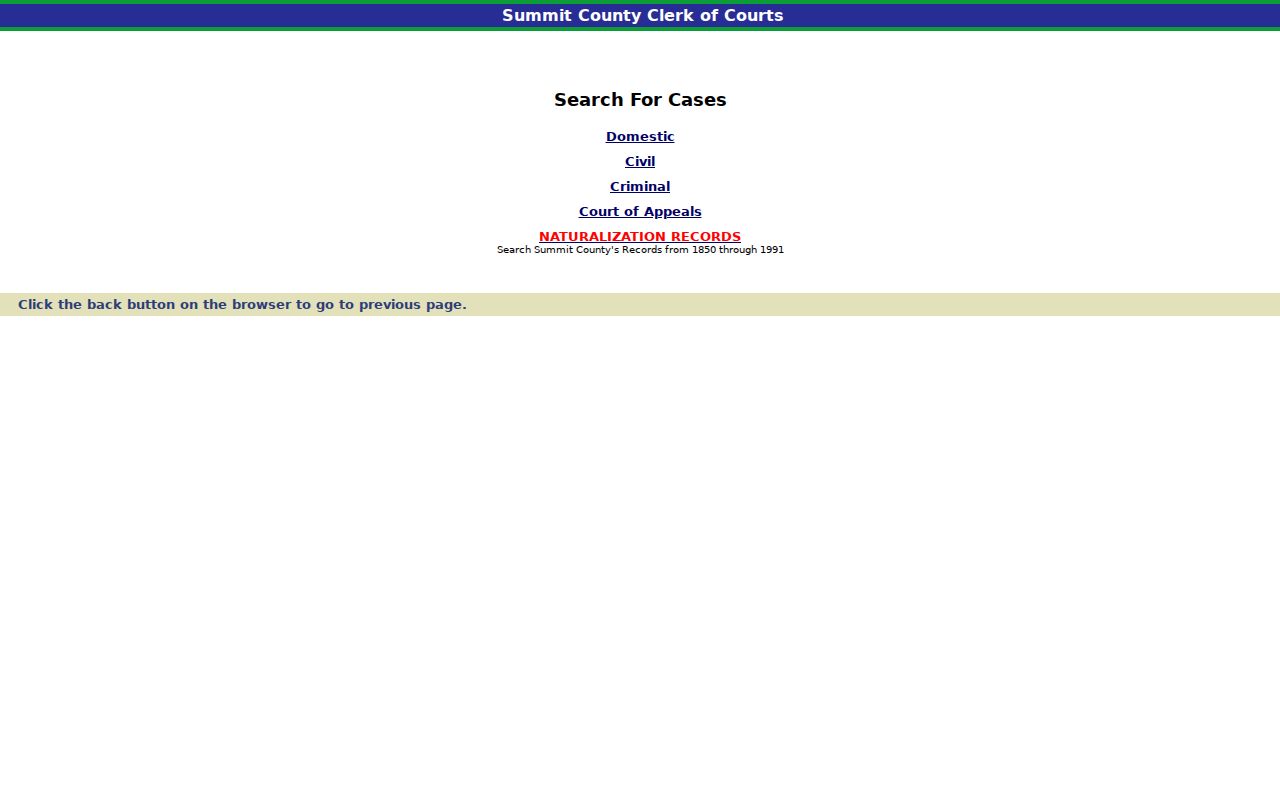
Choosing the correct division first avoids treating one court interface as a complete resident record.
Cuyahoga Falls Vital Trails
Vital records can close a historic Cuyahoga Falls trail, but year and record type control the route. Summit Probate reports historic births and deaths from 1869 through 1908, alongside estate, guardianship, and marriage material from 1840. For current statewide certificate service, Summit County Public Health and the Ohio Department of Health are the documented issuer paths. Verify a particular record before ordering because the channel differs by event year and purpose.
The Ohio History Connection death index is a research index, not a current certificate issuer. It covers Ohio Department of Health death certificates for 1913–1944 and 1954–1970, with other historical series listed by the archive. Preserve the spelling, event year, county, and certificate reference returned before moving to a copy route.
Summit Probate historic vital guidance explains the local historical split and current certificate referrals.
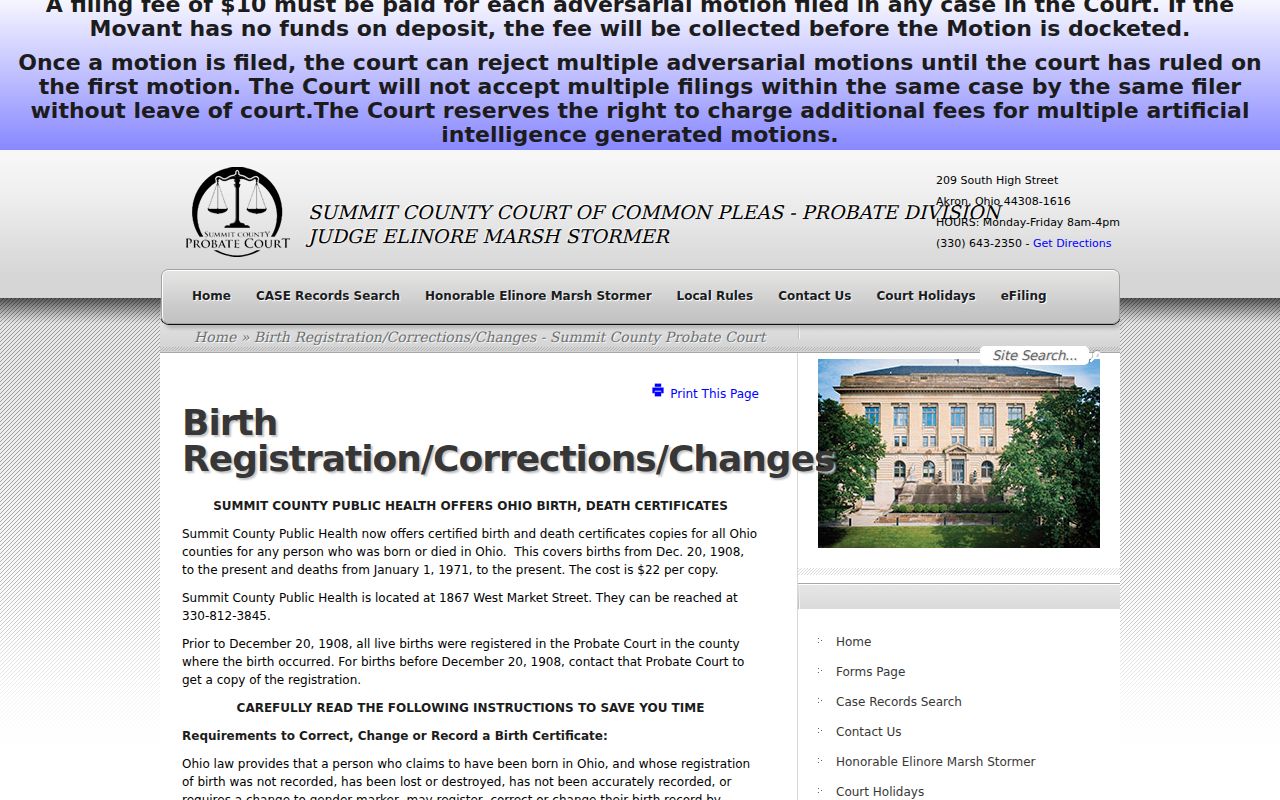
Probate records add archival and estate context that a current certificate request cannot provide.
Historical Cuyahoga Falls Resident Directories
Cuyahoga Falls has a deep printed address trail. Cuyahoga Falls History publishes digitized directory materials from 1859–1891, including early business-directory posts. Akron-Summit County Public Library Special Collections maintains broader Akron-Summit directory runs, where Cuyahoga Falls appears in most years but each volume should be opened to confirm inclusion. The 1859 Williams volume and later Burch or Official City Directory titles can place a name and street in a particular printed year.
Cuyahoga Falls Library Local History Collection is upstairs in the first adult-nonfiction aisle at 2015 Third St. It has area directories, yearbooks, and local history. The library also holds Cuyahoga Falls Reporter microfilm from 1870–1952 and News Press microfilm from 1930–1979 and 1981–2014, leaving a documented 1980 gap. The Cuyahoga Falls city directory page keeps the full collection and entry-reading detail together.
The library research page is the local starting point for history and genealogy questions.
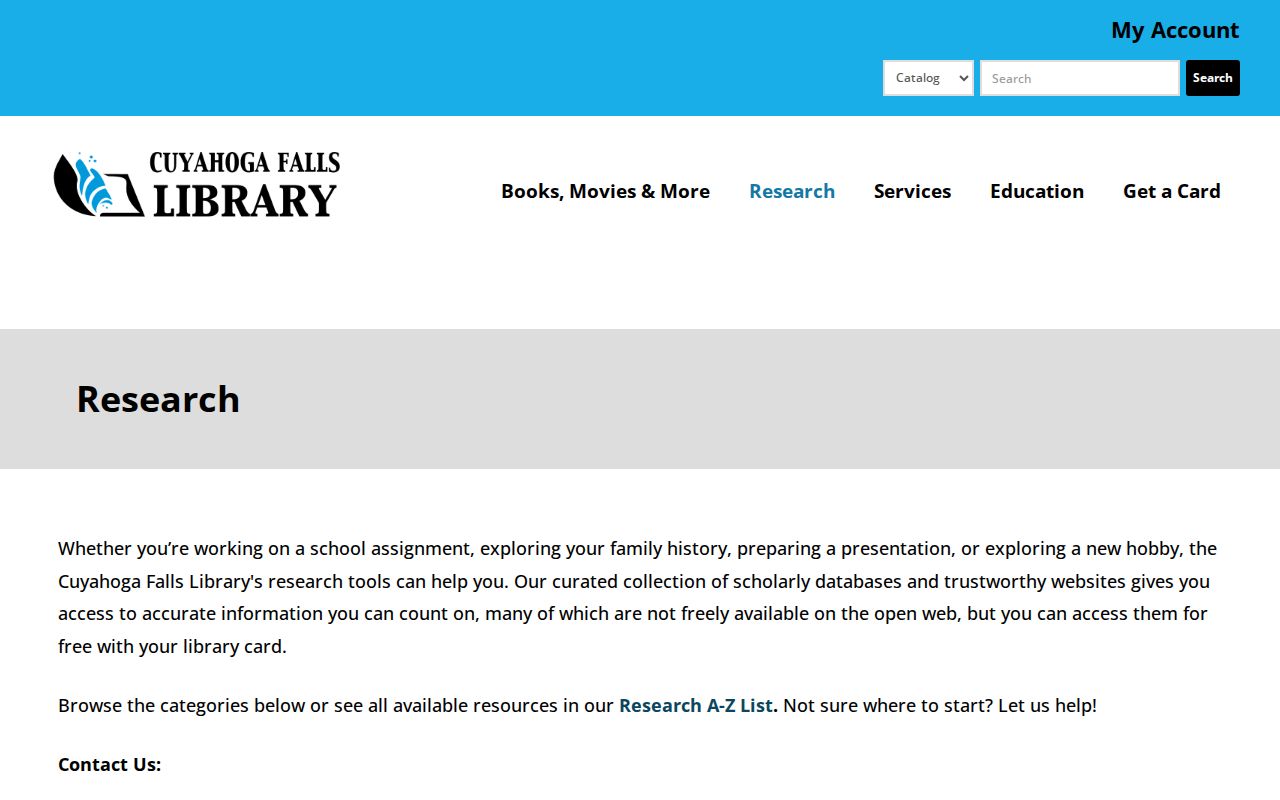
Library staff and ASCPL Special Collections provide a counterweight to the limits of online records.
Cuyahoga Falls Maps and Records
Maps make a Cuyahoga Falls address legible before an old record is interpreted. The city’s Interactive Mapping page points to a local address or parcel tool that supplies zoning designation, council ward, code-enforcement references, tax-information links, satellite view, and street view. The county map supplies parcel geometry. One gives city context; the other is the stronger route for parcel navigation.
Older records may use a different place name. Cuyahoga Falls began as Manchester, and the city merged with Northampton Township in 1985/1986. A deed, map, cemetery reference, or directory from the former township area can retain Northampton Township rather than today’s city name. The legal description and a historic map are safer bridges than mechanically replacing the old locality name.
The city mapping overview shows the local layers that sit beside the county parcel record.
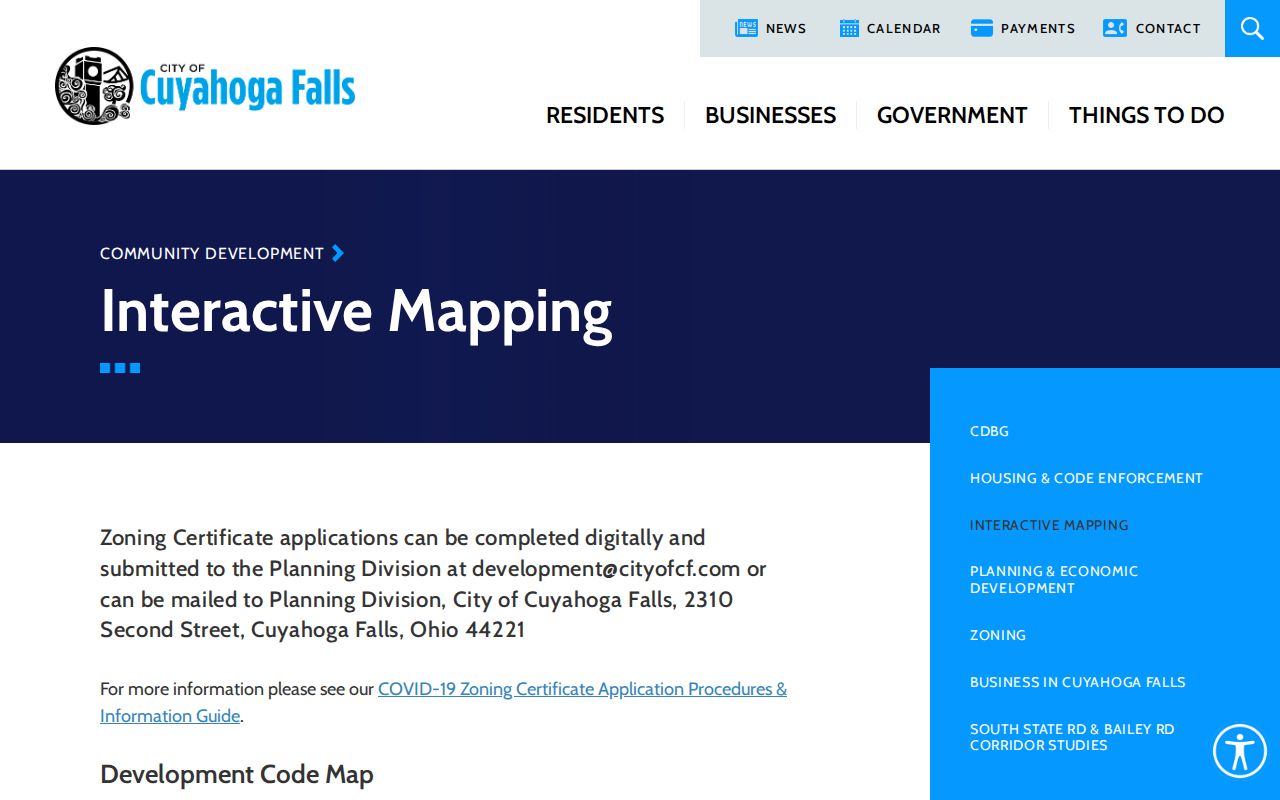
Map context can explain a ward or code record, but it does not identify an entire household.
Cuyahoga Falls Resident Privacy
Ohio public-record access has firm limits. The Safe at Home Address Confidentiality Program protects qualified participants through a substitute address and confidential voter information under R.C. §§111.41–111.47. Voter exclusions, protected motor-vehicle data, sealed court material, adoption records, and sensitive vital-record fields do not become searchable because a person’s name or street is known.
Ohio’s Public Records Act, R.C. 149.43, governs access to nonexempt records. It does not require an office to create a new resident report or disclose confidential information. When a portal reaches its limit, ask the custodian for a particular existing record and respect its response.
Cuyahoga Falls Official Search Checks
Direct official links matter. The Fiscal Office warns that private letters can solicit payment for a deed that the county can provide. Summit Clerk also warned in August 2026 about a fraudulent record-search impersonation page and directs users to begin at its official domain. Type a known government, court, library, or archive address directly, then compare the domain and contact details before sharing information or paying a fee.
The Cuyahoga Falls Mayor’s Court docket is the official court route shown here; use the Clerk’s fraud warning as a reason to type the court domain directly.
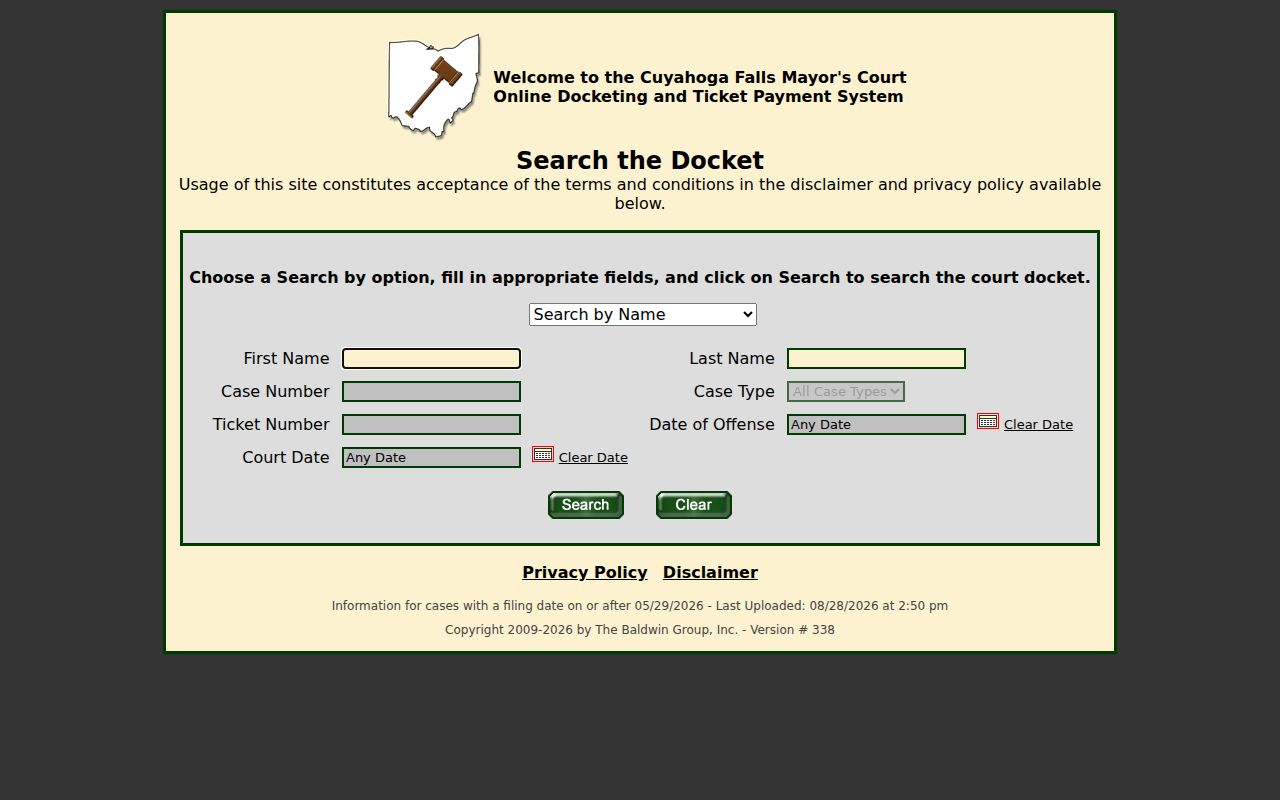
An official court docket can be useful for a known case, but it should be opened from the verified court route and read in its jurisdictional context.
Cuyahoga Falls Public Safety Records
Public-safety sources answer narrow questions, not general resident searches. The Summit County Sheriff hub links official custody, registry, records-request, and scam resources. A current roster can change quickly, and a court docket remains the proper companion record when a case question exists. Cuyahoga Falls Police Records handles accident and incident reports by the identifiers its forms require, with exemptions and redactions applied where the law requires.
The Sheriff official hub collects the county public-safety access routes.
Use a custody or police source only for its stated purpose, then verify a time-sensitive result with the responsible agency.
For a city accident request, a report number is the clearest route. Without it, the city form uses two identifiers from the driver name, accident date, and location. That narrow process illustrates the resident-search rule throughout Cuyahoga Falls: ask for the record that exists, keep its date and custodian visible, and do not turn a limited public-safety record into a broad person profile.