
Cuyahoga Falls Resident Lookup Records
One name can appear in several official systems for different reasons. The Summit County property-access system distinguishes the parcel's situs, tax owner, and mailing details. That can establish a land or tax connection, not who currently occupies the address. Ohio Voter Search is a named-person registration check. Court records show a party in a particular matter, while Probate can hold an estate, guardianship, marriage, or historic vital record. Keep the record date and exact spelling with each result so similar names do not become one person by accident.
| Record | What it confirms | Where | Access |
|---|---|---|---|
| Parcel or tax record | Owner or tax entity tied to a parcel | Summit Fiscal Office | Public web record, with situs and mailing distinctions |
| Voter registration | Named registration, precinct, and polling context | Ohio Voter Search | First name, last name, and county required |
| Mayor's Court docket | Party in an eligible city case | Cuyahoga Falls Mayor's Court | Public docket row, subject to court limits |
| Clerk or Probate file | Party, estate, marriage, or related court matter | Summit County courts | Division-specific search or focused request |
| Death index or certificate | Historic death or burial evidence | Ohio History Connection, Public Health, or Probate | Index and copy channels differ by year |
| Credential or entity filing | Known license or filing relationship | Ohio eLicense or Secretary of State | Not proof of a private residence |
Use a property record only when the question involves a parcel. Use the voter tool for a known person in Summit County. For family history, the event year determines whether Probate, Public Health, the state, or an archive index is the right source.
Cuyahoga Falls Voter Lookup
Ohio Voter Search checks a particular registrant, not everyone in a neighborhood. Enter the first name, last name, and select Summit County. A result supplies registration status context, precinct, and polling-place information. It does not reveal ballot choices. The state's search tips support trying a formal or familiar first name, a former last name, or a prior address when a direct query fails. If several candidates share a name, collect a second identifier rather than picking the closest result.
| Search control | Type | Required | Use |
|---|---|---|---|
| First Name | Text | Yes | Try a documented derivative when needed. |
| Last Name | Text | Yes | A former name can be useful. |
| County | Dropdown | Yes | Select Summit for a current Cuyahoga Falls registration. |
| Submit | Button | Yes | Runs the named-person search. |
| Street name | Conditional dropdown | No | Appears when results need narrowing. |
Registration is time-bound. A person may have moved, changed a name, registered elsewhere, or be protected by Ohio's address-confidentiality program. Those possibilities make a no-result a reason to refine the search, not a conclusion about a person's presence in Cuyahoga Falls.
Note: Preserve the result date, name form, and precinct context before comparing a voter record with another official source.
Cuyahoga Falls Court Lookup
Cuyahoga Falls Mayor's Court has its own official docket search for eligible city matters. It accepts name, ticket, case, type, offense-date, and court-date fields. Common Pleas General Division, Domestic Relations, and Ninth District Court of Appeals matters belong with the Summit County Clerk's separate division path. Probate is another court with its own record holdings. Choose the court that owns the matter before treating a search result as meaningful.
| Docket field | What it shows |
|---|---|
| Last and first name | How the party was indexed in the result row. |
| Ticket number | The ticket identifier when one exists. |
| Offense date | The date connected to the listed event. |
| Case number and type | The court's case identifier and category. |
| Court date | The listed date for the court matter. |
The Mayor's Court display paginates 20 matches at a time and shows no more than 200. A docket row is not the full case file, and it does not establish a current household or address. Sealed, expunged, juvenile, adoption, mental-health, and protected records can be unavailable or redacted.
Use the Summit Probate Case Records search when an estate, marriage, guardianship, or other Probate matter is the relevant question.
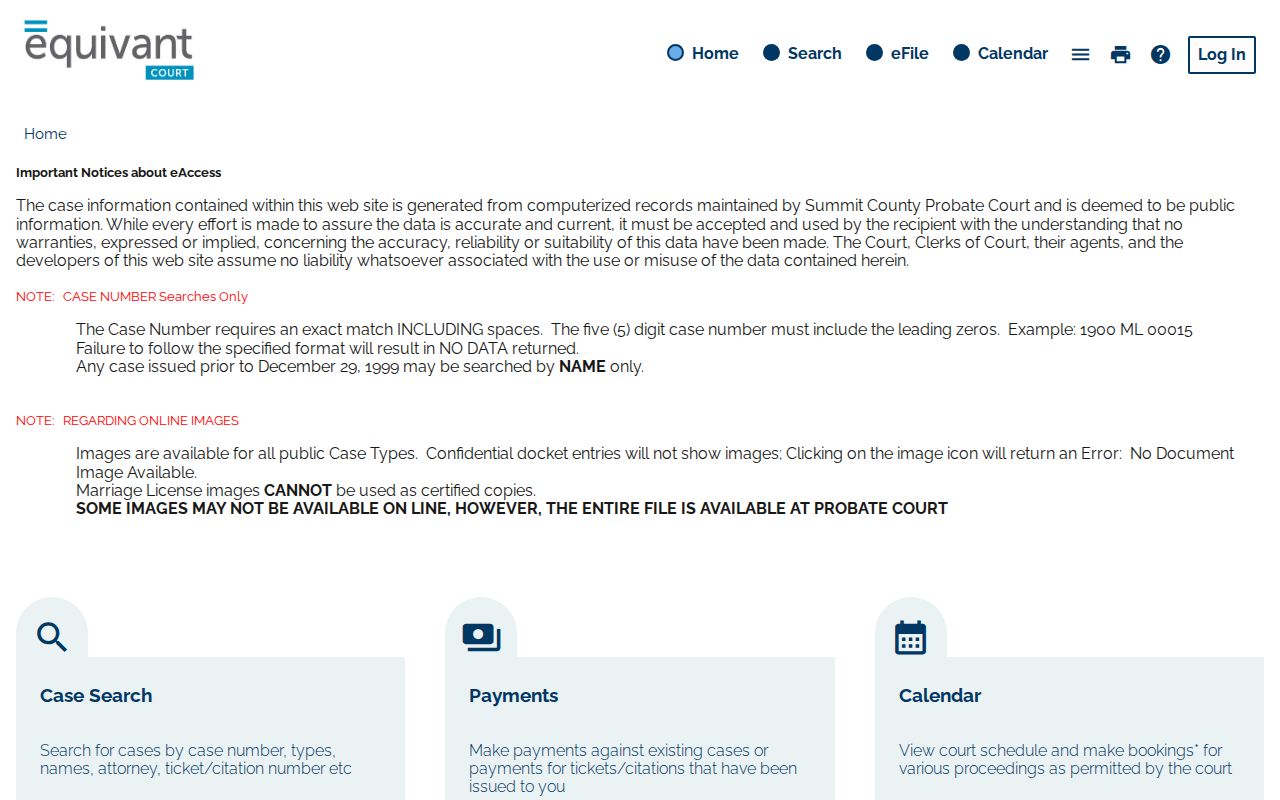
Probate's separate search route is a useful reminder that a complete Cuyahoga Falls court check cannot depend on one docket alone.
Cuyahoga Falls Probate Records
Summit County Probate keeps estate, guardianship, and marriage material from 1840, plus historic local births and deaths from 1869 through 1908. For marriage-index assistance from 1840 through 1980, the court asks for both parties' last names and the marriage year. Its genealogy office does not undertake extensive research, and historic register photocopies are not available through that channel. Ask for the specific estate, marriage, or record range instead of a general summary of a person.
For current certificate channels, Summit County Public Health serves Ohio births from December 20, 1908 and deaths from January 1, 1971. Probate's information listed $22 per current copy when inspected. The Ohio Department of Health Office of Vital Statistics is the state route. Delivery method, proof, and fees should be confirmed before an order because those details can change.
Historic death research can begin with the Ohio History Connection index. It covers Ohio Department of Health death certificates for 1913–1944 and 1954–1970, with separate listed series. Record the exact name, date, certificate year or number, and result address. An index entry points to a record; it is not itself the same as an issued copy.
Note: Match an event year to the right custodian before requesting a certificate, typed historic record, or archive copy.
Verify Cuyahoga Falls Residents
Cross-checking reduces the risk of mixing people with the same name. A current parcel may start the trail, but it needs a separate named record for a responsible conclusion. The following sequence keeps each source in its proper role.
- Write down the full name, variant spelling, and one independent detail such as a date, relative, parcel, or case number.
- Check the Summit parcel record only for a possible owner connection, preserving the situs and mailing fields separately.
- Run Ohio Voter Search with the name and Summit County, then compare the returned registration context with the known detail.
- Use the appropriate court, Probate, directory, or vital index for a dated second record. Request a specific existing file when the online result is not enough.
- Docket
- A court's running record of a case, usually indexed by parties and case identifiers rather than a biography.
- Index and image
- An index points to a record. An image is a viewing copy of the source document, when the custodian makes one available.
- Certified copy
- A copy issued and certified by the holding office for an official use. It is not the same as a search-result row.
Historical Cuyahoga Falls names can also appear in printed directories. When the question turns from one current person to a past address, use the dated collection rather than treating a modern search as historical proof.
Cuyahoga Falls Clerk Requests
The Summit Clerk's public division selector routes searches for Domestic, Civil, Criminal, Court of Appeals, and Naturalization Records. Naturalization coverage on that path is identified as 1850 through 1991. If web access ends, use the Clerk's electronic public-records request form for a known case, file date, party, or description of an existing record. The form offers pickup, mail, email for noncertified copies, and an interoffice option for county staff. Certified copies cannot be emailed.
A focused request is more useful than asking an office to construct a person profile. Give the correct division, case number when known, file date, party names, and the precise document sought. The Clerk says the form is generally available within 24 hours during normal business hours, excluding weekends and legal holidays. That statement is not a statewide deadline. Ohio's Public Records Act governs access to nonexempt existing records.
Cuyahoga Falls Credential Checks
A known Ohio credential can be checked through Ohio eLicense. It verifies a credential relationship, not a roster of Cuyahoga Falls residents. Likewise, the Secretary of State's business search can corroborate an entity or statutory-agent filing, but an agent or business address is not a private residence. Keep those results separate from voter, property, and court evidence.
The Ohio eLicense verification screen illustrates the kind of narrow, named search that can support an already identified record.
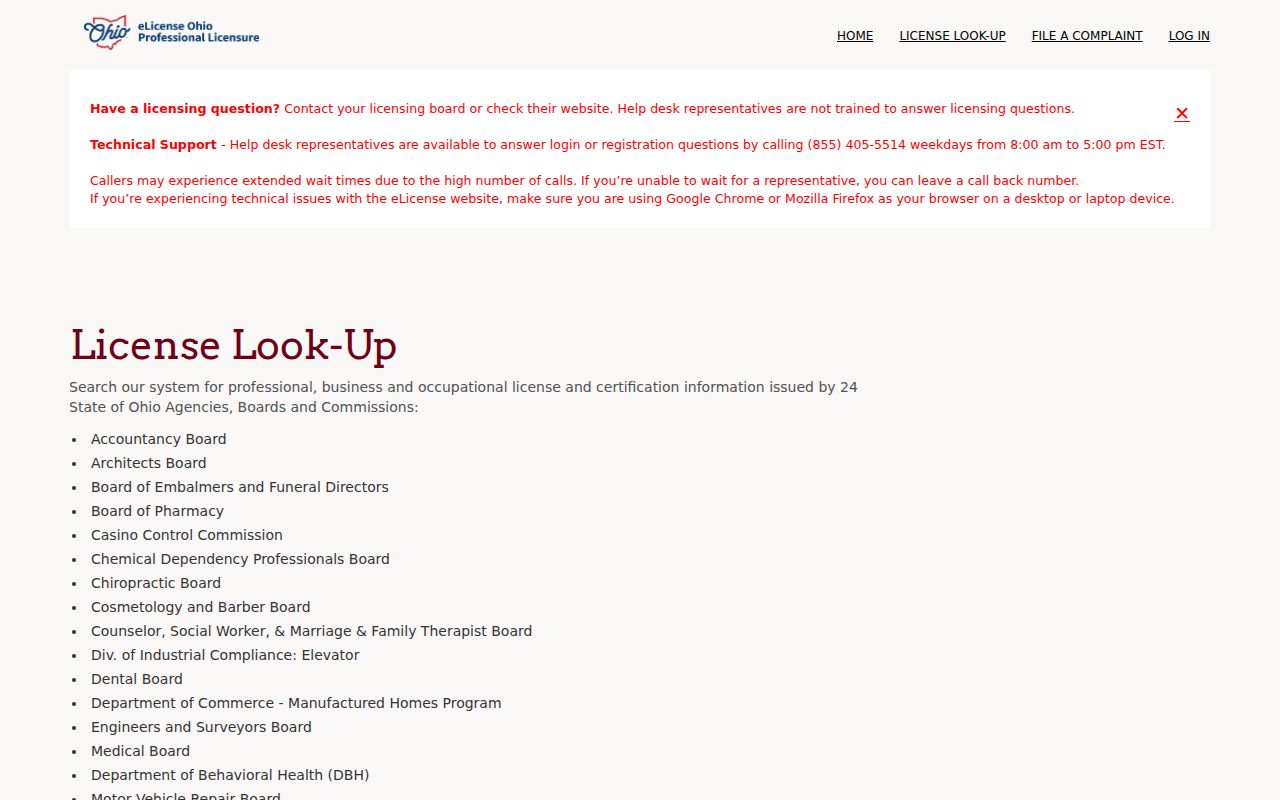
A credential status, board, type, or date may help distinguish like-named people, but it should never be expanded into an address claim.
Cuyahoga Falls Resident Lookup Limits
Ohio law provides public access to nonexempt records, not access to every personal detail. Safe at Home participants may use substitute addresses, and their voter information is confidential under R.C. 111.41–111.47. Other limits can apply to sealed court material, juvenile and adoption records, protected voter fields, and sensitive vital-record data. A person with no public filing, or no match in a selected source, may remain outside the result set.
Lawful use. Use Cuyahoga Falls records for personal, lawful research such as family history, estate questions, civic transparency, or checking a record with its custodian. Do not use any result to stalk, harass, threaten, or harm a person.
Cuyahoga Falls Clerk Safety
In August 2026, the Summit County Clerk warned about a fraudulent record-search page impersonating the court and directed users to its official systems. Begin at the Clerk's official warning and public route, then confirm the division before entering information. The Clerk says it does not accept online payments. That direct-domain check protects both the searcher and the integrity of the record trail.